
Policy is only as good as the evidence behind it – and in most institutions, that evidence is fragmented. It sits in databases that different departments cannot easily query, in interaction logs no one has time to read, and in public sentiment that surfaces only after a decision has been made. Proto’s Insight Advisor brings that evidence into reach, giving policymakers an agentic layer for generating insight from the data their institution already holds.
Asking questions of your own data
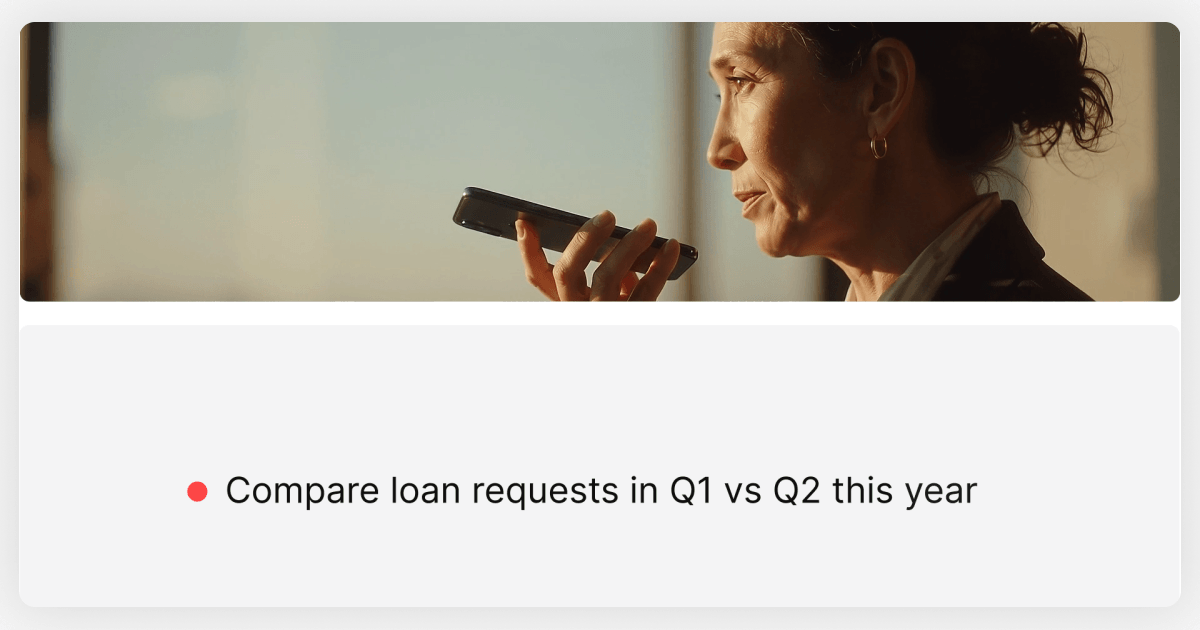
The core idea is simple: leadership should be able to ask a question and get an answer in seconds, not commission a report that takes weeks. With the Insight Advisor, a policymaker can pose a question in natural language – by text or by voice – and receive both text and graphical insights drawn from the institution’s databases and interaction history. The example is concrete: “What bank lost the most?” or “Generate the 90-day comparison” returns an answer and a chart, not a data export to interpret later.
Under the hood, the AI agent interprets the question, retrieves the relevant data and renders the result as whichever chart fits the question – a trend as a line, a comparison as a bar, a breakdown as a pie – directly inside the conversation.
Because the advisor ingests multilingual data and delivers insights in the executive’s own language, it works in exactly the environments where policy evidence is hardest to assemble: multilingual jurisdictions where the underlying data spans several languages.
From interactions and sentiment to policy
For a regulator, the most valuable evidence is often what citizens are already saying. The Insight Advisor draws on interaction data from the AI agent channels an institution already uses for citizen engagement and, through the Analytics and Perception modules, on nationwide consumer sentiment scraped from social media and public sources. A policymaker can see institution mentions, involved citizens and sentiment trends alongside operational data – the kind of disaggregated, real-time picture that makes consumer protection policy responsive rather than reactive.
This means leadership isn’t waiting on a separate system to be built: the same interaction data already generated by the institution’s customer-facing AI agents becomes the input for the questions leadership asks, without a manual export or handoff between departments.
Kept current by design
Policy data goes stale quickly. Continuous training lets the institution feed its knowledge base – more than 10,000 files per month with daily re-training – so the advisor reflects the latest circulars, reports and case outcomes. The result is an evidence base that keeps pace with the decisions it is meant to inform.